- The problem
- Where can digital transformation create the most value in Indian agriculture by 2025?
- My role
- Co-author, team of 7
- What I did
- Assessed five opportunity areas across the crop cycle: agri lending and insurance, weather and pre-planting, planting and in-season care, harvesting, and decentralised selling.
- Outcome
- A recommendation and public–private partnership approach; digital agriculture could add $50–70B of economic value by 2025.
Show all 33 pages

Read the report as text
Page 1
Digitizing Indian Agriculture Industry
Identifyiing top 5 opportunities and recommending one opportunity for digitalization which has the maximum potential for growth by 2025
Page 2
Digitizing Indian Agriculture
Industry
Identifyiing top 5 opportunities and recommending one opportunity for digitalization
which has the maximum potential for growth by 2025
Authors Logeshwar R Sahil Jain Manjula Devi Prakashika Mishra Anirudh Bhadoria Shashwat Sahil Ahuja
Page 4
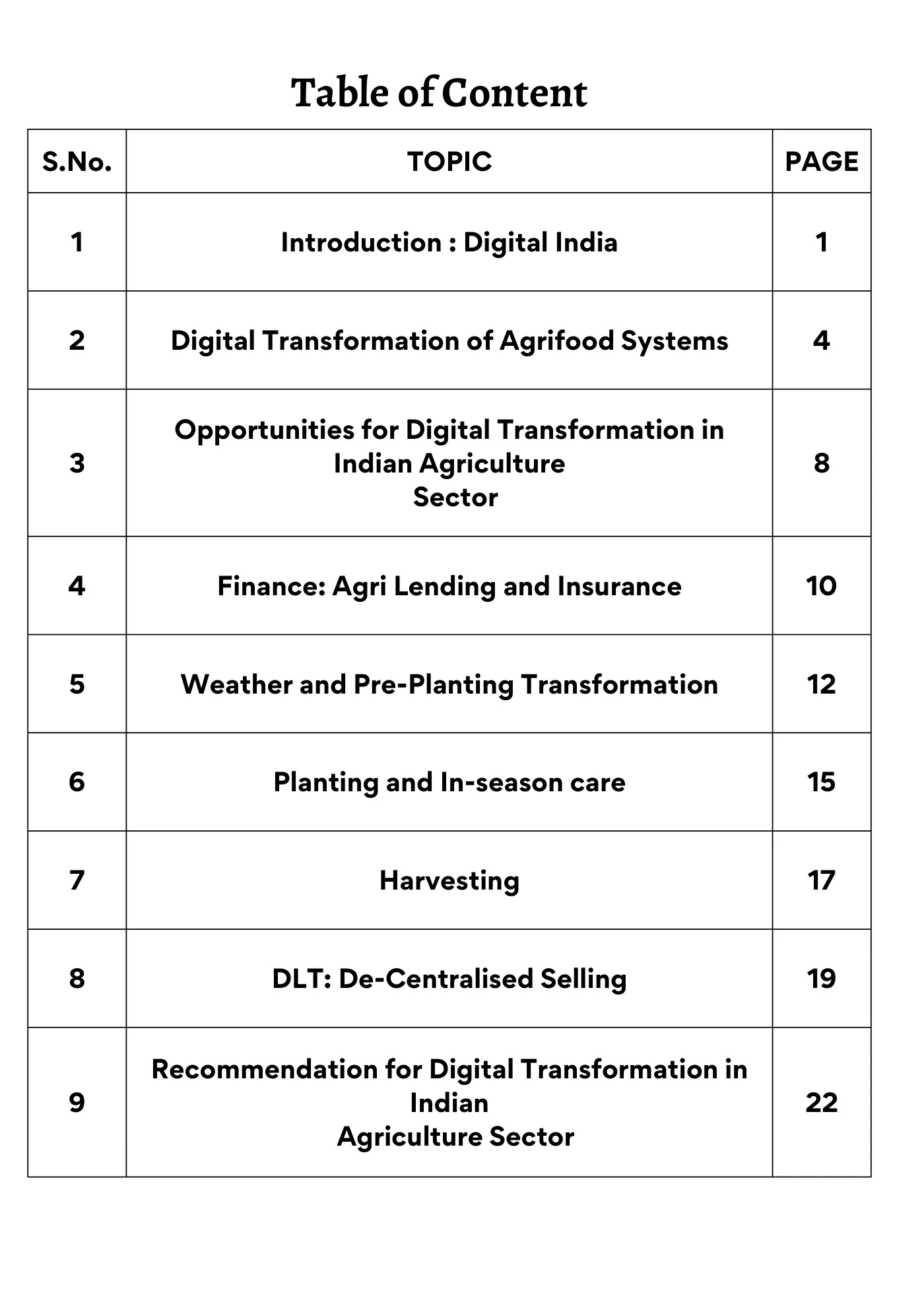
Table of Content
S.No. TOPIC PAGE
1 Introduction : Digital India 1
2 Digital Transformation of Agrifood Systems 4
3 Opportunities for Digital Transformation in
Indian Agriculture
Sector
4 Finance: Agri Lending and Insurance 10
5 Weather and Pre-Planting Transformation 12
6 Planting and In-season care 15
7 Harvesting 17
8 DLT: De-Centralised Selling 19
9 Recommendation for Digital Transformation in
Indian Agriculture Sector
Page 6
Introduction : Digital India
On the consumer side, India's digital revolution is well underway, despite the fact that corporate adoption is uneven and a gap is growing between digital leaders and other companies. This study looks at the potential for future digital growth in India as well as the difficulties that will need to be overcome as it continues to embrace the digital economy.
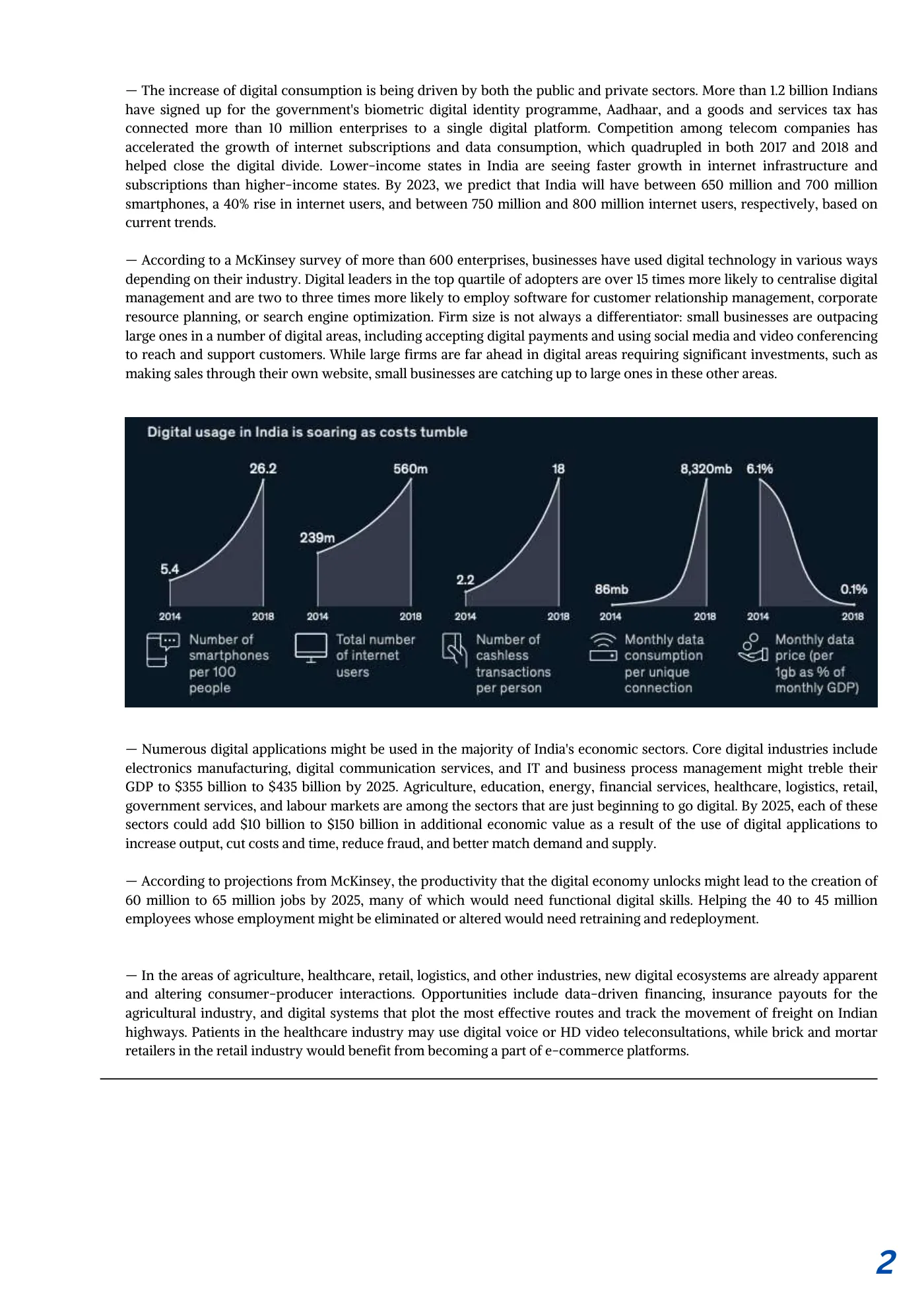
— With 560 million internet users in 2018, India is the second-largest and fastest-growing market for digital consumers after China. Average monthly mobile data use in India is 8.3 gigabits (GB), compared to 5.5 GB in China and a range of 8.0 to 8.5 GB in South Korea, a country with a developed digital economy. In 2018, Indians downloaded more than 12 billion applications and had 1.2 billion active mobile phone subscriptions. With the exception of Indonesia, India is digitising more quickly than any other nation in McKinsey research of 17 developed and developing economies, and there is still plenty of potential for expansion: just over 40% of the population has access to the internet.
Page 7
— The increase of digital consumption is being driven by both the public and private sectors. More than 1.2 billion Indians have signed up for the government's biometric digital identity programme, Aadhaar, and a goods and services tax has connected more than 10 million enterprises to a single digital platform. Competition among telecom companies has accelerated the growth of internet subscriptions and data consumption, which quadrupled in both 2017 and 2018 and helped close the digital divide. Lower-income states in India are seeing faster growth in internet infrastructure and subscriptions than higher-income states. By 2023, we predict that India will have between 650 million and 700 million smartphones, a 40% rise in internet users, and between 750 million and 800 million internet users, respectively, based on current trends.
— According to a McKinsey survey of more than 600 enterprises, businesses have used digital technology in various ways depending on their industry. Digital leaders in the top quartile of adopters are over 15 times more likely to centralise digital management and are two to three times more likely to employ software for customer relationship management, corporate resource planning, or search engine optimization. Firm size is not always a differentiator: small businesses are outpacing large ones in a number of digital areas, including accepting digital payments and using social media and video conferencing to reach and support customers. While large firms are far ahead in digital areas requiring significant investments, such as making sales through their own website, small businesses are catching up to large ones in these other areas.
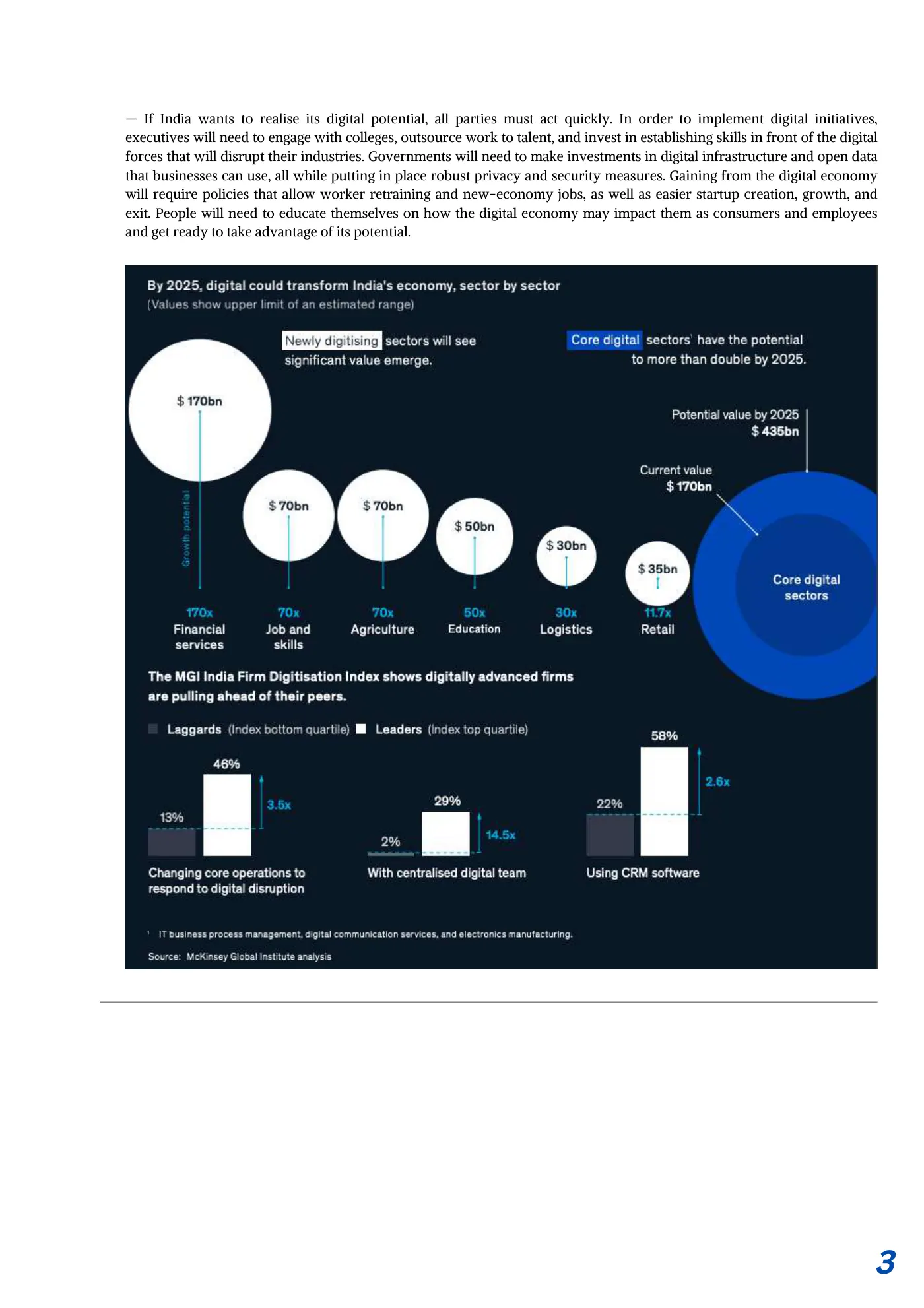
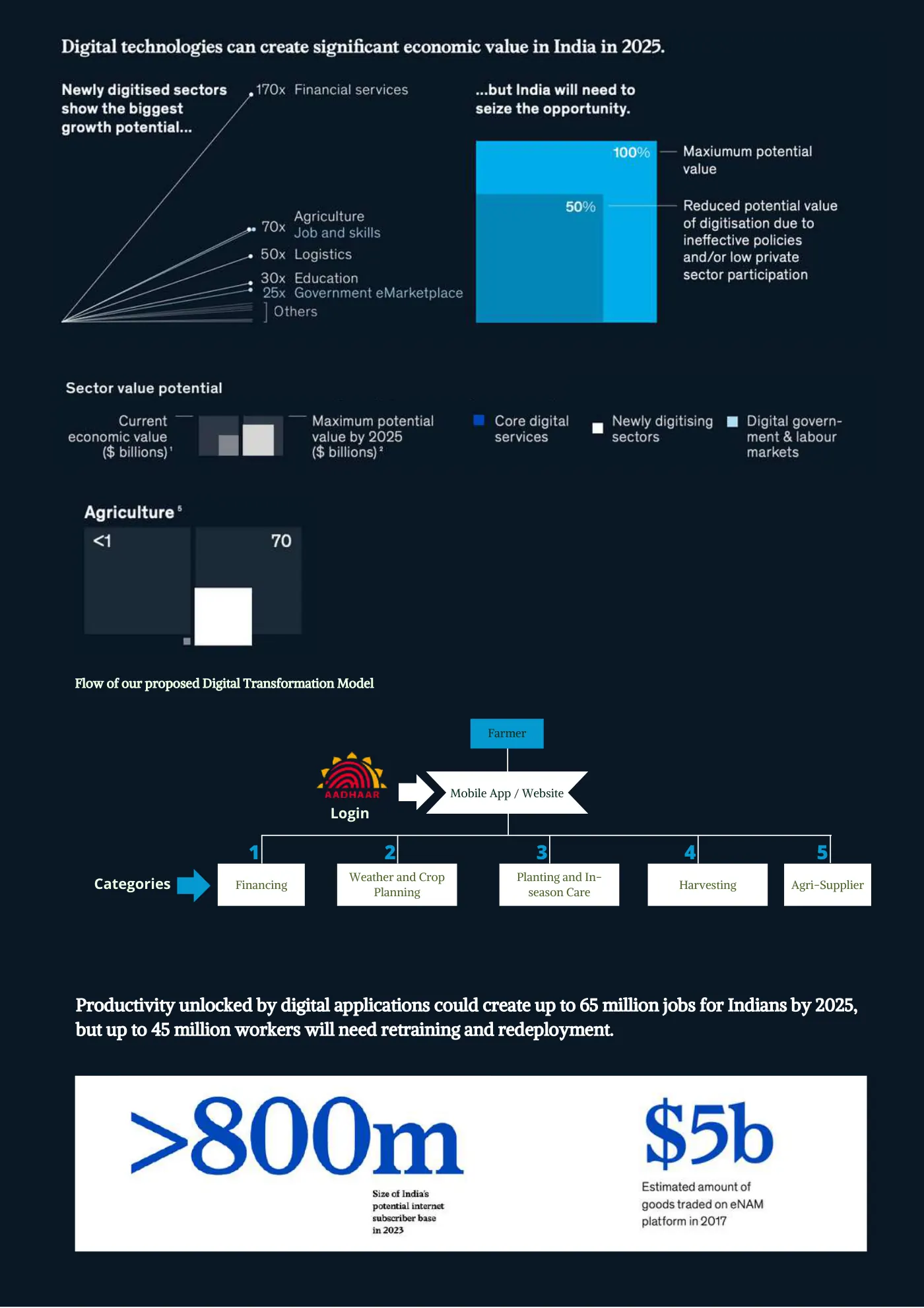
— Numerous digital applications might be used in the majority of India's economic sectors. Core digital industries include electronics manufacturing, digital communication services, and IT and business process management might treble their GDP to $355 billion to $435 billion by 2025. Agriculture, education, energy, financial services, healthcare, logistics, retail, government services, and labour markets are among the sectors that are just beginning to go digital. By 2025, each of these sectors could add $10 billion to $150 billion in additional economic value as a result of the use of digital applications to increase output, cut costs and time, reduce fraud, and better match demand and supply.
— According to projections from McKinsey, the productivity that the digital economy unlocks might lead to the creation of 60 million to 65 million jobs by 2025, many of which would need functional digital skills. Helping the 40 to 45 million employees whose employment might be eliminated or altered would need retraining and redeployment.
— In the areas of agriculture, healthcare, retail, logistics, and other industries, new digital ecosystems are already apparent and altering consumer-producer interactions. Opportunities include data-driven financing, insurance payouts for the agricultural industry, and digital systems that plot the most effective routes and track the movement of freight on Indian highways. Patients in the healthcare industry may use digital voice or HD video teleconsultations, while brick and mortar retailers in the retail industry would benefit from becoming a part of e-commerce platforms.
Page 8
— If India wants to realise its digital potential, all parties must act quickly. In order to implement digital initiatives, executives will need to engage with colleges, outsource work to talent, and invest in establishing skills in front of the digital forces that will disrupt their industries. Governments will need to make investments in digital infrastructure and open data that businesses can use, all while putting in place robust privacy and security measures. Gaining from the digital economy will require policies that allow worker retraining and new-economy jobs, as well as easier startup creation, growth, and exit. People will need to educate themselves on how the digital economy may impact them as consumers and employees and get ready to take advantage of its potential.
Page 10
Digital Transformation of Agrifood Systems
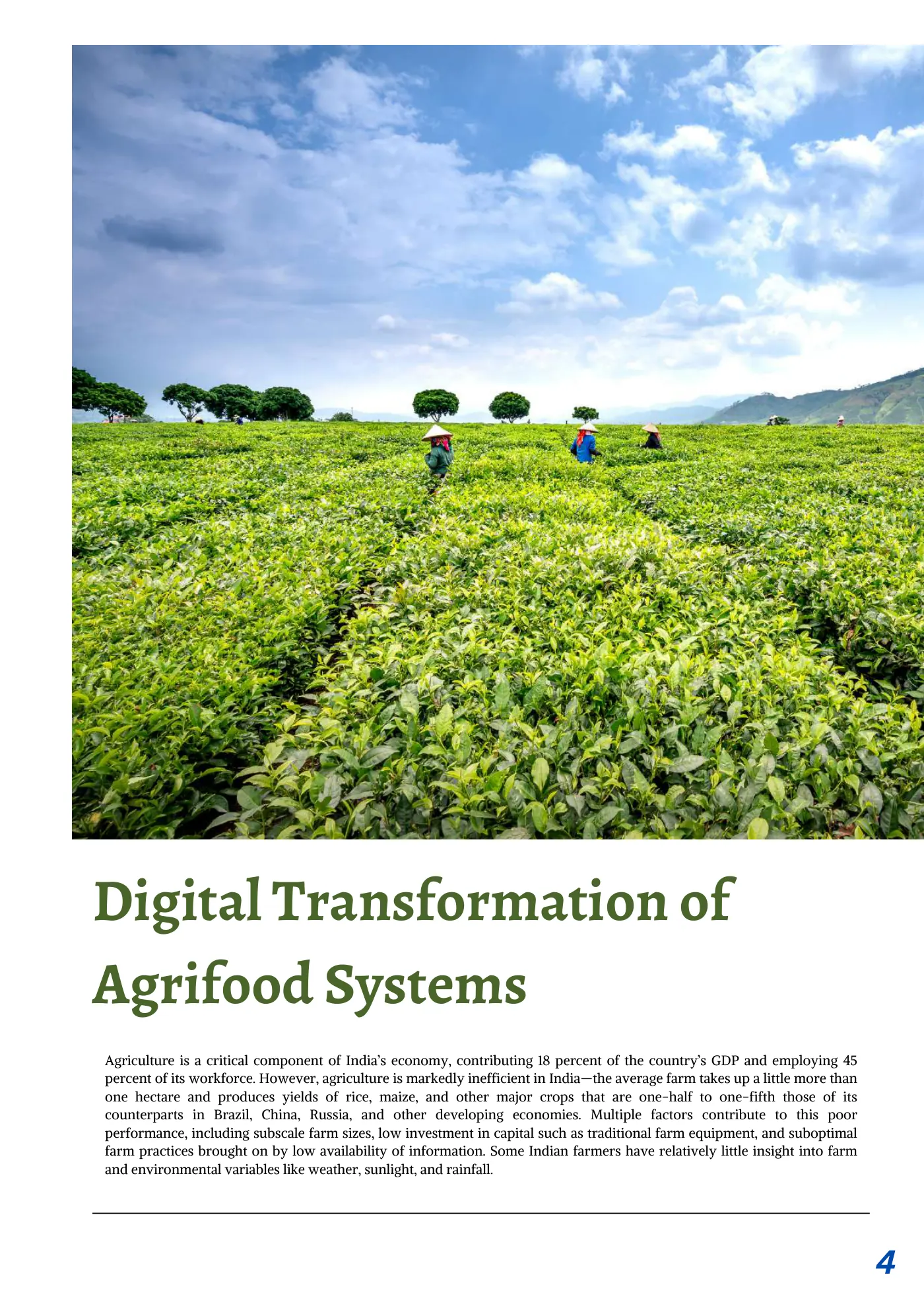
Agriculture is a critical component of India’s economy, contributing 18 percent of the country’s GDP and employing 45 percent of its workforce. However, agriculture is markedly inefficient in India—the average farm takes up a little more than one hectare and produces yields of rice, maize, and other major crops that are one-half to one-fifth those of its counterparts in Brazil, China, Russia, and other developing economies. Multiple factors contribute to this poor performance, including subscale farm sizes, low investment in capital such as traditional farm equipment, and suboptimal farm practices brought on by low availability of information. Some Indian farmers have relatively little insight into farm and environmental variables like weather, sunlight, and rainfall.
Page 11
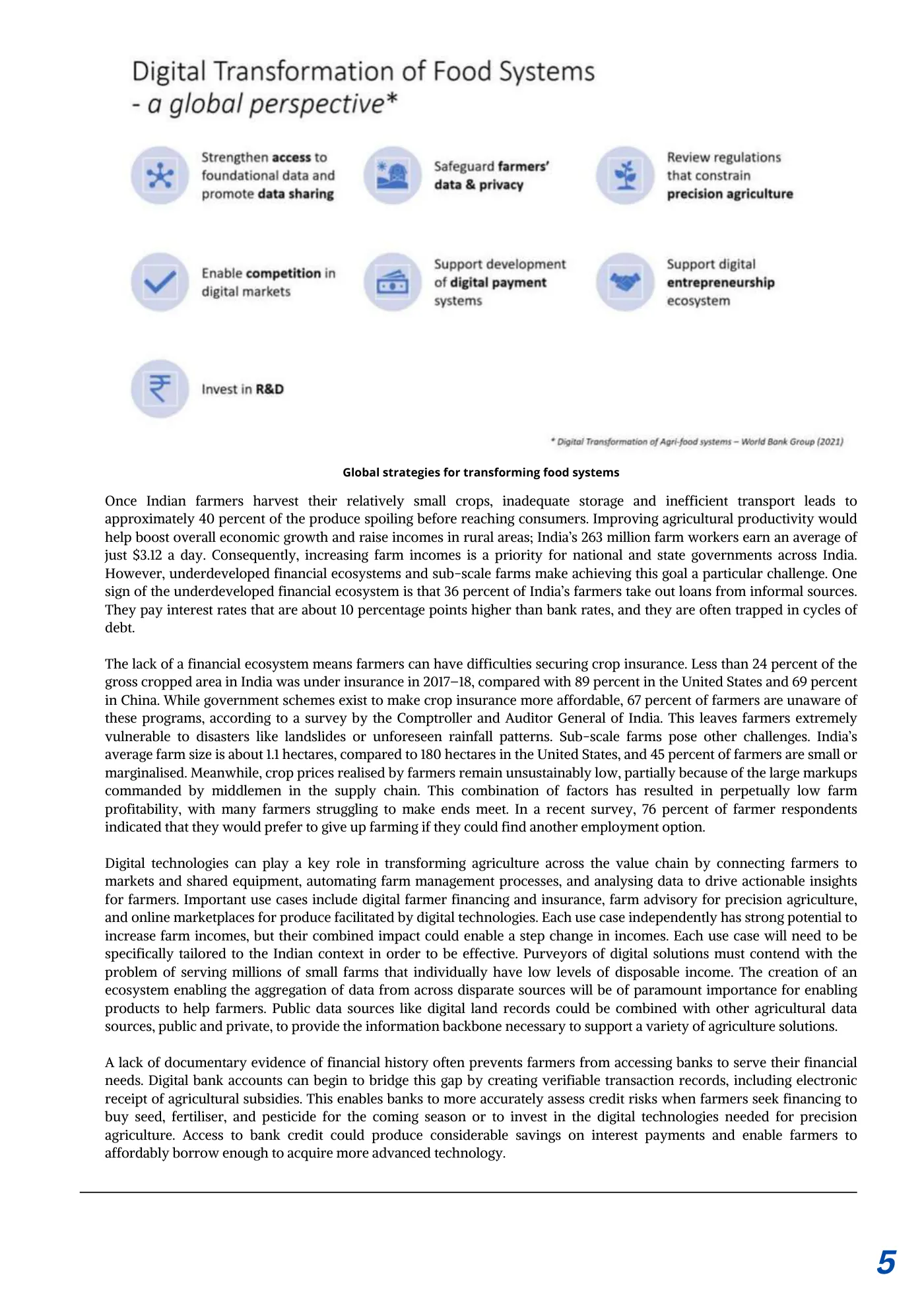
Global strategies for transforming food systems
Once Indian farmers harvest their relatively small crops, inadequate storage and inefficient transport leads to approximately 40 percent of the produce spoiling before reaching consumers. Improving agricultural productivity would help boost overall economic growth and raise incomes in rural areas; India’s 263 million farm workers earn an average of just $3.12 a day. Consequently, increasing farm incomes is a priority for national and state governments across India. However, underdeveloped financial ecosystems and sub-scale farms make achieving this goal a particular challenge. One sign of the underdeveloped financial ecosystem is that 36 percent of India’s farmers take out loans from informal sources. They pay interest rates that are about 10 percentage points higher than bank rates, and they are often trapped in cycles of debt.
The lack of a financial ecosystem means farmers can have difficulties securing crop insurance. Less than 24 percent of the gross cropped area in India was under insurance in 2017–18, compared with 89 percent in the United States and 69 percent in China. While government schemes exist to make crop insurance more affordable, 67 percent of farmers are unaware of these programs, according to a survey by the Comptroller and Auditor General of India. This leaves farmers extremely vulnerable to disasters like landslides or unforeseen rainfall patterns. Sub-scale farms pose other challenges. India’s average farm size is about 1.1 hectares, compared to 180 hectares in the United States, and 45 percent of farmers are small or marginalised. Meanwhile, crop prices realised by farmers remain unsustainably low, partially because of the large markups commanded by middlemen in the supply chain. This combination of factors has resulted in perpetually low farm profitability, with many farmers struggling to make ends meet. In a recent survey, 76 percent of farmer respondents indicated that they would prefer to give up farming if they could find another employment option.
Digital technologies can play a key role in transforming agriculture across the value chain by connecting farmers to markets and shared equipment, automating farm management processes, and analysing data to drive actionable insights for farmers. Important use cases include digital farmer financing and insurance, farm advisory for precision agriculture, and online marketplaces for produce facilitated by digital technologies. Each use case independently has strong potential to increase farm incomes, but their combined impact could enable a step change in incomes. Each use case will need to be specifically tailored to the Indian context in order to be effective. Purveyors of digital solutions must contend with the problem of serving millions of small farms that individually have low levels of disposable income. The creation of an ecosystem enabling the aggregation of data from across disparate sources will be of paramount importance for enabling products to help farmers. Public data sources like digital land records could be combined with other agricultural data sources, public and private, to provide the information backbone necessary to support a variety of agriculture solutions.
A lack of documentary evidence of financial history often prevents farmers from accessing banks to serve their financial needs. Digital bank accounts can begin to bridge this gap by creating verifiable transaction records, including electronic receipt of agricultural subsidies. This enables banks to more accurately assess credit risks when farmers seek financing to buy seed, fertiliser, and pesticide for the coming season or to invest in the digital technologies needed for precision agriculture. Access to bank credit could produce considerable savings on interest payments and enable farmers to affordably borrow enough to acquire more advanced technology.
Page 12
Even with data-driven digital credit-risk models, lenders still face considerable uncertainty in serving small and marginal farmers. Lenders will require creative and flexible solutions to protect themselves as they meet farmers’ individual needs, and digital solutions can help. The government-sponsored Kisan Credit Card program allows farmers access to a flexible credit facility with repayments that can be rescheduled in the event of demonstrated unforeseen circumstances. Additional solutions to decrease risk could include ring-fenced disbursal accounts available only for certain purchases as well as loan repayments that are triggered automatically when a borrower sells his or her crop. Meanwhile, easily accessible digital information about land ownership, weather, and other variables could improve and extend crop insurance underwriting. The same data, augmented with imagery from satellites, drones, or an individual’s mobile phone, could speed the claims process and accelerate payouts if crops fail.
The Climate Corporation, a US-based subsidiary of Monsanto established in 2006, pioneered using weather data to offer insurance products. Payment is based on the occurrence of fixed insured events (for example, a drought) that relieves farmers of the need to file claims at all and avoids the costly exercise of assessing actual crop damage. The Climate Corporation sold its weather-based insurance scheme to insurer AmTrust Financial Services in 2015.
A holistic approach to adoption of digital technologies, the critical role of data, the requirement to ensure that the farmer has agency and control over his/her data, the paramount importance of privacy through protection of personal data, and the need to leverage emerging technologies for precision agriculture are key takeaways from the global perspective.
Need for Ecosystem Thinking
Agriculture sector is a large, diverse, heterogeneous, complex, and sensitive ecosystem. Any attempt to transform the sector needs to imbibe an ecosystem thinking and a digital ecosystem. The agriculture value chain extends from crop/ varietal selection and crop management to the market. It involves public and private players in agricultural inputs and services as also logistics. Establishing a digital ecosystem of agriculture needs to take a long-term view of aspects like interoperability, data governance, data quality, data standards, security and privacy, besides promoting open innovation. A significant requirement is adoption of a decentralised, federated architecture that assures autonomy to the service providers and all other actors and ensures interoperability at the same time.
Typical Farming Cycle
Typical Farming Cycle of Indian Farmers involves these following steps:
Arranging Capital for Farming Pre-planning and Pre-planting Planting and In-season care Harvesting Selling
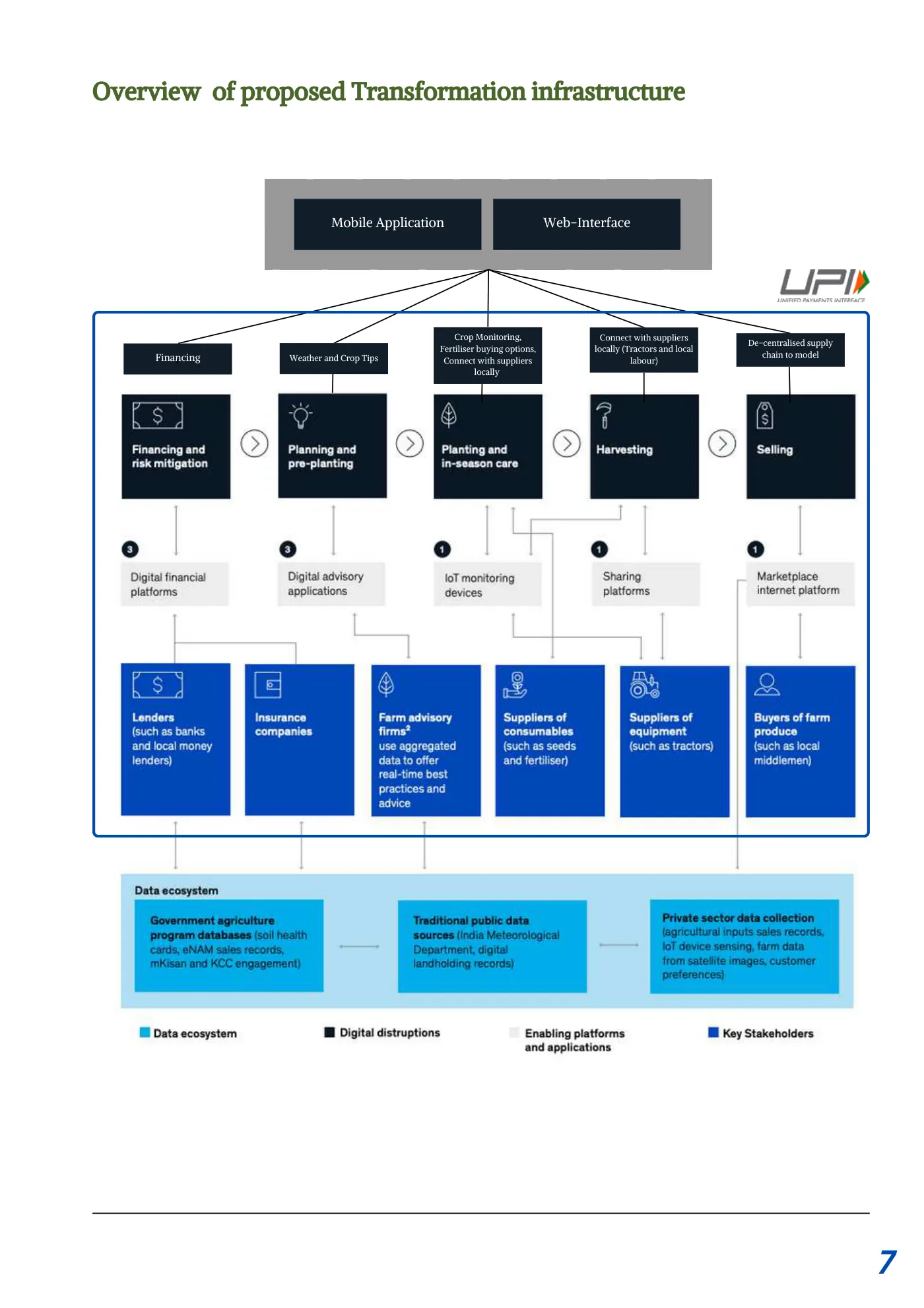
The holistic approach on how Digital Infrastructure can be Implemented is given in the Figure given below.
Page 13
Overview of proposed Transformation infrastructure
Mobile Application
Web-Interface
De-centralised supply
Crop Monitoring, Fertiliser buying options,
Connect with suppliers locally (Tractors and local
chain to model
Financing Weather and Crop Tips
Connect with suppliers
labour)
locally
Page 15
Opportunities for Digital Transformation in Indian Agriculture Sector
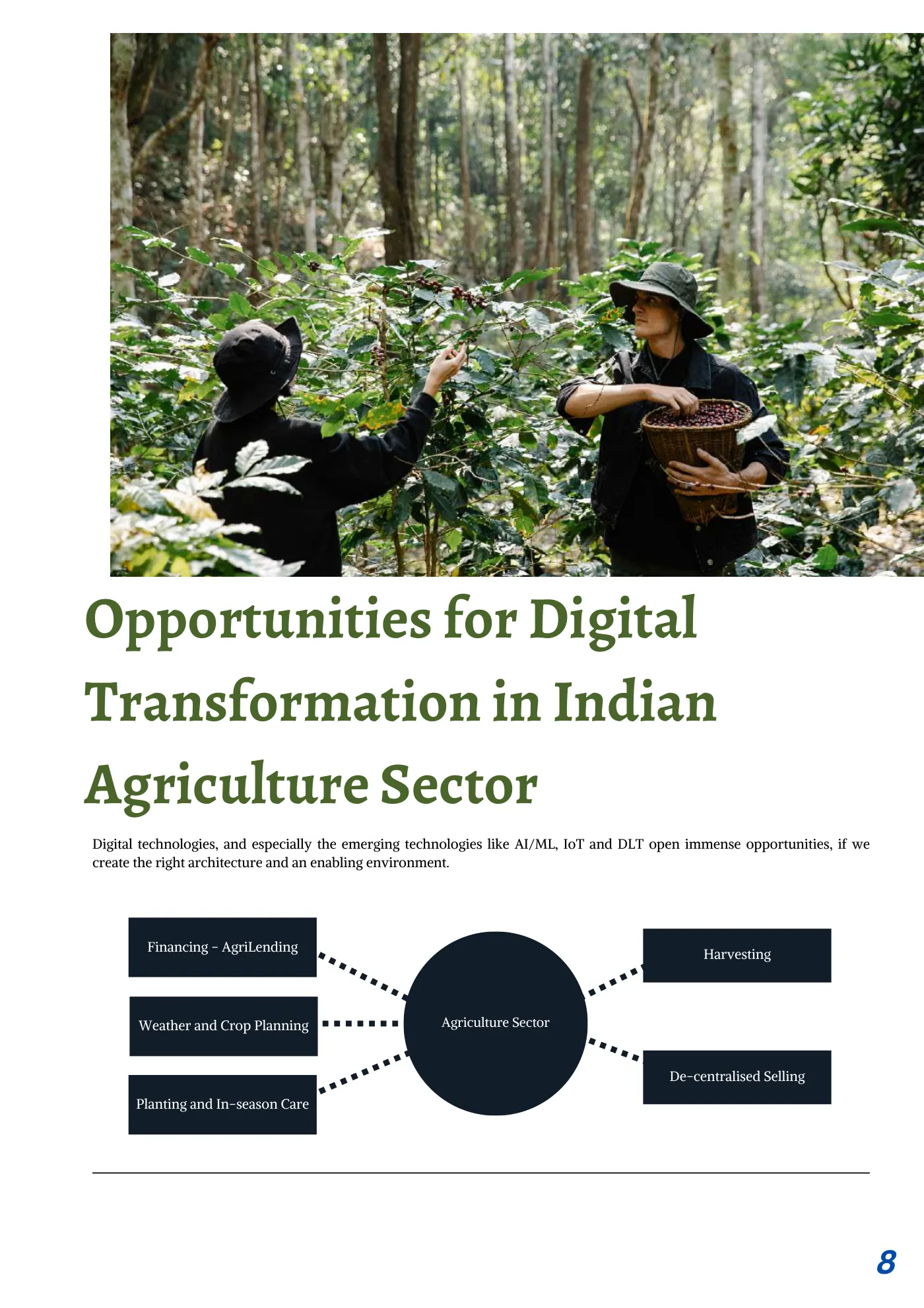
Digital technologies, and especially the emerging technologies like AI/ML, IoT and DLT open immense opportunities, if we create the right architecture and an enabling environment.
Financing - AgriLending
Harvesting
Agriculture Sector Weather and Crop Planning
De-centralised Selling
Planting and In-season Care
Page 16
Flow of our proposed Digital Transformation Model
Farmer
Mobile App / Website
Login
1 2 3 4 5
Planting and In-
Financing Weather and Crop
Agri-Supplier
Categories
Planning
season Care Harvesting
Productivity unlocked by digital applications could create up to 65 million jobs for Indians by 2025, but up to 45 million workers will need retraining and redeployment.
Page 17
Finance: Agri Lending and Insurance 1.
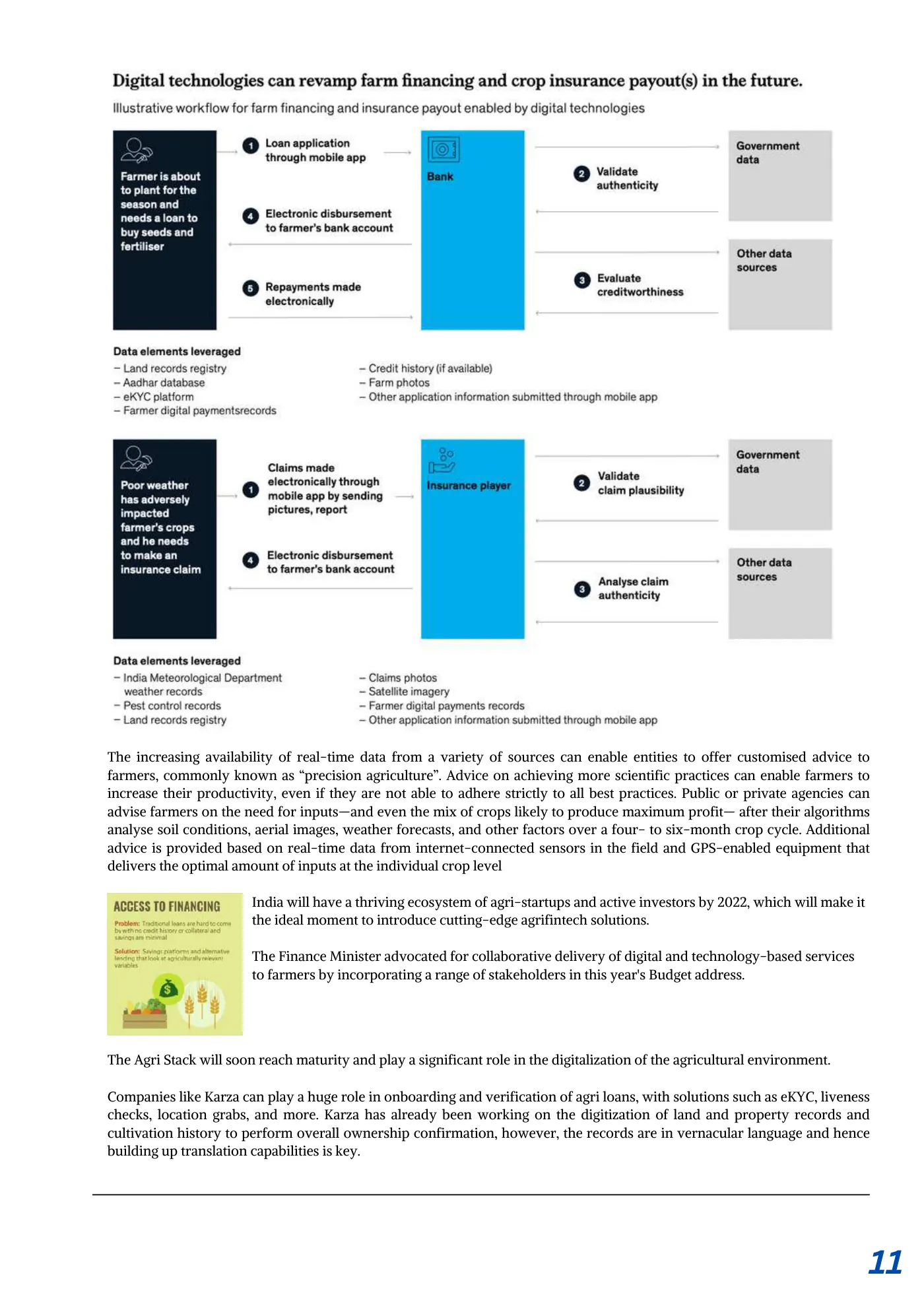
Credit is essential to farming because it causes a huge shift in agriculture, the investment process, and technical progress, all of which increase production. According to the conventional development paradigm, land rights enable access to the financing required for agricultural transformation. However, in reality, many farmers lack access to financing, leaving them with a crores-sized cash gap. Since smallholders trade in cash marketplaces and lack formal credit records, it is challenging for lenders to assess creditworthiness. As a result, they want the farm as security in the event of default. Farmers without formal land rights, however, may find it difficult to borrow money against their most precious asset. Additionally, banks shouldn't use property as security since they frequently have to sell land they got via defaults below cost. How Digital Transformation is helping ?
The expense of confirming farmers' capacity to repay a loan is reduced by digital technologies. Businesses evaluate creditworthiness based on client phone and mobile money history. To determine loan eligibility, organisations are using satellite images, weather predictions, and data from remote sensors. Drone footage can verify a farmer's tangible assets, such as land, vehicles, or tin roofs. The requirement for collateral can be reduced since digital verification lessens lenders' concerns about a farmer's capacity to repay loans. Tracking expenses are decreased by digital technologies. A computerised supply chain tracking system allows farmers to use their produce as collateral to get the finance they need for planting in many regions of the world. Real-time digital tracking ensures that the crops weren't lost or harmed throughout the post-harvest process, so lenders accept them as collateral.
Page 18
The increasing availability of real-time data from a variety of sources can enable entities to offer customised advice to farmers, commonly known as “precision agriculture”. Advice on achieving more scientific practices can enable farmers to increase their productivity, even if they are not able to adhere strictly to all best practices. Public or private agencies can advise farmers on the need for inputs—and even the mix of crops likely to produce maximum profit— after their algorithms analyse soil conditions, aerial images, weather forecasts, and other factors over a four- to six-month crop cycle. Additional advice is provided based on real-time data from internet-connected sensors in the field and GPS-enabled equipment that delivers the optimal amount of inputs at the individual crop level
India will have a thriving ecosystem of agri-startups and active investors by 2022, which will make it the ideal moment to introduce cutting-edge agrifintech solutions.
The Finance Minister advocated for collaborative delivery of digital and technology-based services to farmers by incorporating a range of stakeholders in this year's Budget address.
The Agri Stack will soon reach maturity and play a significant role in the digitalization of the agricultural environment.
Companies like Karza can play a huge role in onboarding and verification of agri loans, with solutions such as eKYC, liveness checks, location grabs, and more. Karza has already been working on the digitization of land and property records and cultivation history to perform overall ownership confirmation, however, the records are in vernacular language and hence building up translation capabilities is key.
Page 19
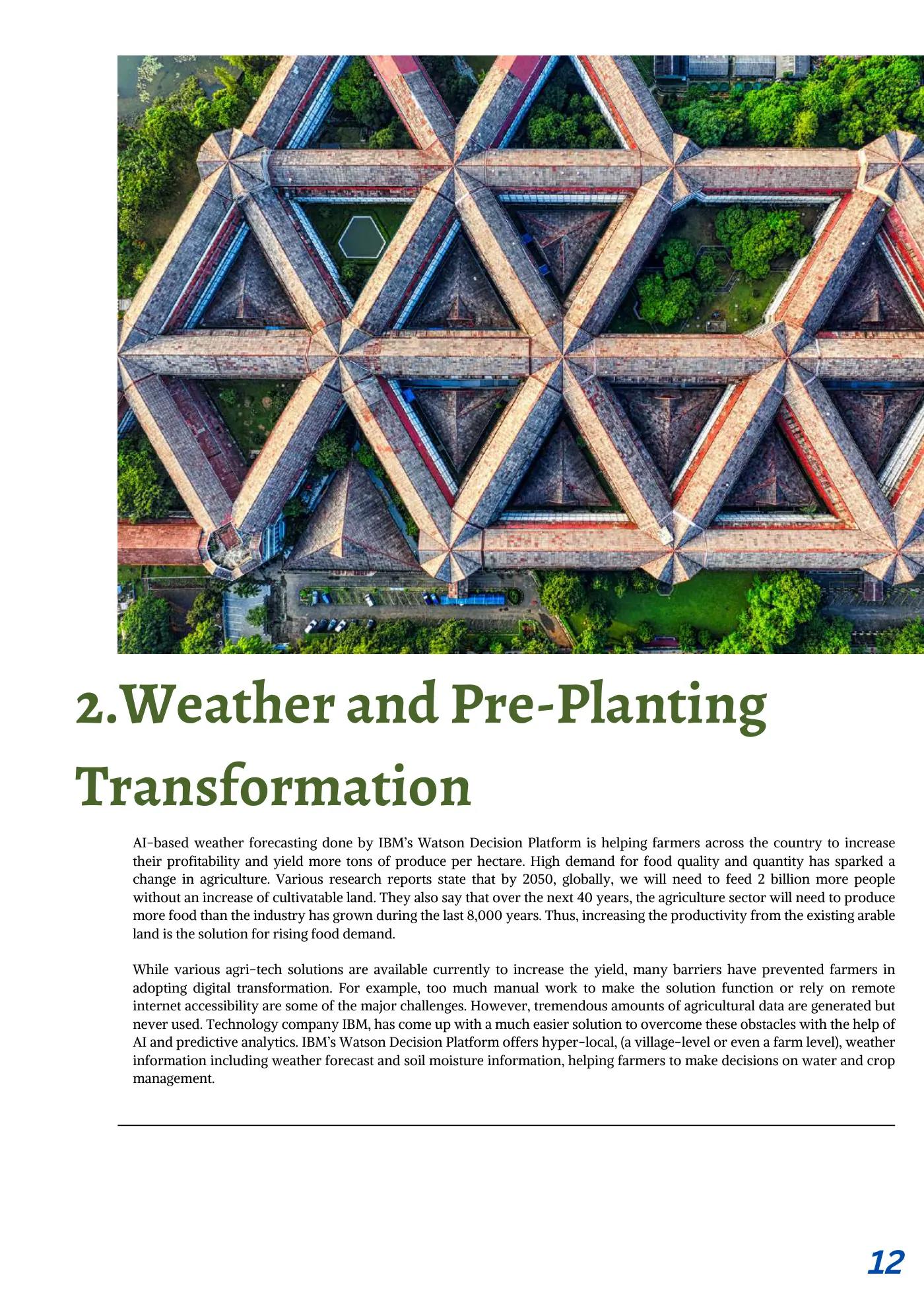
2.Weather and Pre-Planting Transformation
AI-based weather forecasting done by IBM’s Watson Decision Platform is helping farmers across the country to increase their profitability and yield more tons of produce per hectare. High demand for food quality and quantity has sparked a change in agriculture. Various research reports state that by 2050, globally, we will need to feed 2 billion more people without an increase of cultivatable land. They also say that over the next 40 years, the agriculture sector will need to produce more food than the industry has grown during the last 8,000 years. Thus, increasing the productivity from the existing arable land is the solution for rising food demand.
While various agri-tech solutions are available currently to increase the yield, many barriers have prevented farmers in adopting digital transformation. For example, too much manual work to make the solution function or rely on remote internet accessibility are some of the major challenges. However, tremendous amounts of agricultural data are generated but never used. Technology company IBM, has come up with a much easier solution to overcome these obstacles with the help of AI and predictive analytics. IBM’s Watson Decision Platform offers hyper-local, (a village-level or even a farm level), weather information including weather forecast and soil moisture information, helping farmers to make decisions on water and crop management.
Page 20
“It is important for a farmer to know when it will rain. If AI can predict the rain accurately and how much and when that will happen, farmers can make meaningful decisions,” says Himanshu Goyal, India Business Leader, The Weather Company, IBM. “Watson platform will provide these type of accurate data so that farmers can decide when to irrigate, add fertilisers or delay some decisions,” he says. Weather data will also predict diseases.
IBM’s solution provides information on productivity assessments, decision guidance and probabilistic weather conditions that feature a detailed analysis of sub-seasonal and seasonal forecasts. “The precision agriculture solution combines AI and weather data to obtain and analyse farm-level insights,” Goyal says. The Watson Decision Platform for agriculture applies AI, machine learning, and advanced analytics to the farm data to extract valuable insights and automatically generate guidance for smarter decisions. A unified dashboard enables farmers to visualise data and alerts related to critical elements such as weather forecasts, soil conditions, evapotranspiration rates, and crop stress. “For instance, AI visual recognition of drone- captured footage may be used to automatically identify certain types and severity levels of pest and disease damage,” he says. Farmers could save time, money and also reduce the impact of pests if they understood how and when to spray pesticides. The AI data also provides insights around irrigation, product application, and planting and harvest timing.
IBM has partnered with many government institutions and private companies and has helped a lot of farmers across the country to increase their farm productivity. Last year the company partnered with Ministry of Agriculture and Farmers Welfare to deploy this solution on a pilot basis for the Kharif crop season in three districts - Bhopal, Rajkot and Nanded - in Madhya Pradesh, Gujarat and Maharashtra, respectively. With its success, the project is now extended to ten districts.
Another recent project is with Karnataka. The state implemented IBM’s Watson platform to predict the prices of tomatoes and maise. IBM developed a price forecasting system for Karnataka Agricultural Prices Commission that predicts the market price trends for at least a fortnight and the production pattern of tomatoes. The dashboard uses IBM’s Watson Decision Platform and blends data from satellite imagery and weather data to assess the acreage and monitor crop health on a real-time basis. It can detect pest and disease infestations, estimate the tomato output and yield, and also forecast prices. Previously, the output estimates are based mainly on acreage data.
Other data like the prices in major markets of neighbouring states, are also considered for the price forecast. The solution was launched for the three major tomato- growing districts of Kolar, Chikkaballapur and Belgavi and two key maise-producing districts of Davangere and Haveri . With more hyper-local data inputs, IBM is now focusing on finetuning the weather prediction. They are focusing to ensure that the weather data and the soil factor data are perfected for most of the regions he sums up.
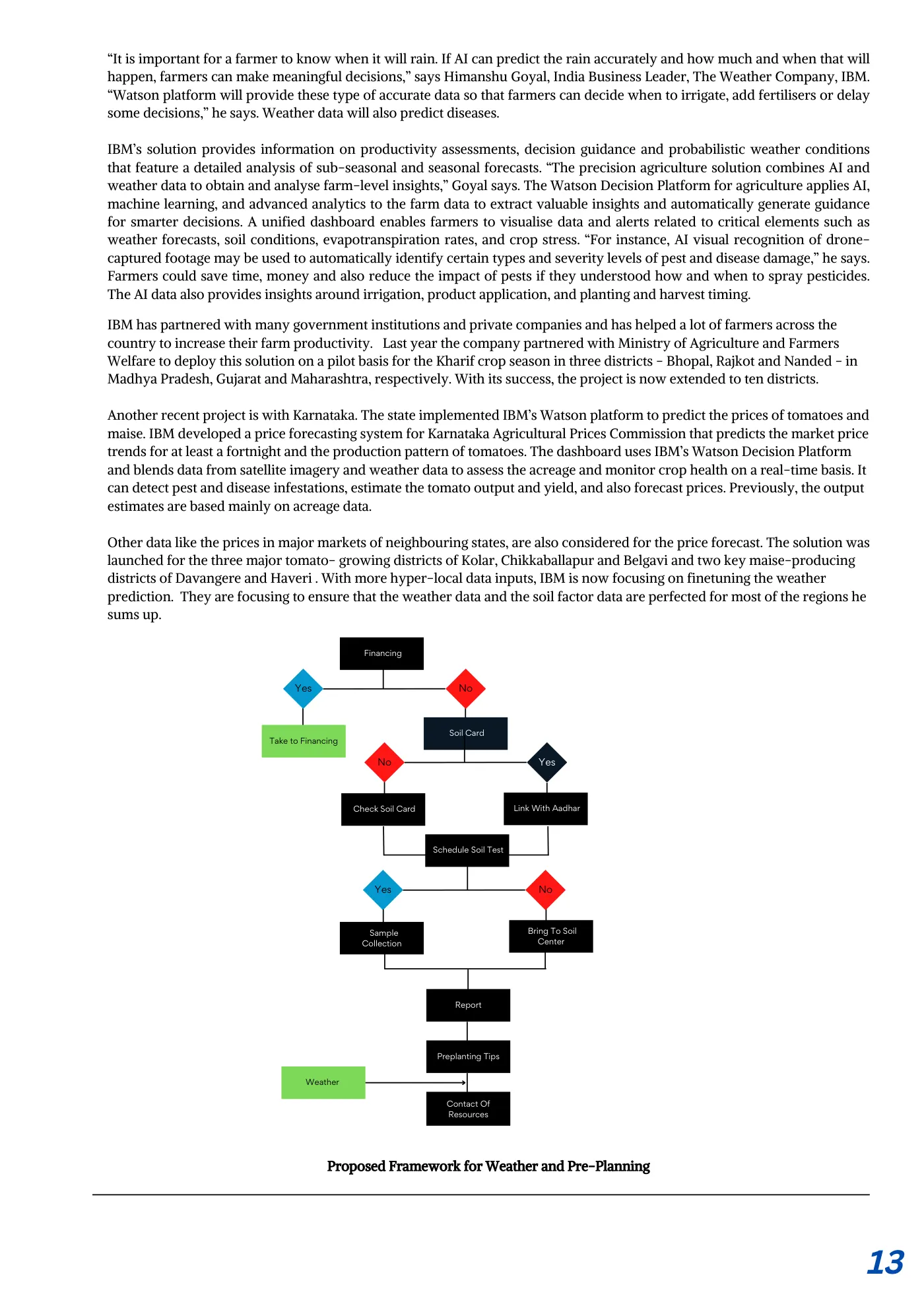
Financing
Yes
Soil Card
Take to Financing
Yes No
Link With Aadhar
Check Soil Card
Schedule Soil Test
Yes
Bring To Soil
Center Sample Collection
Report
Preplanting Tips
Weather
Contact Of
Resources
Proposed Framework for Weather and Pre-Planning
Page 21
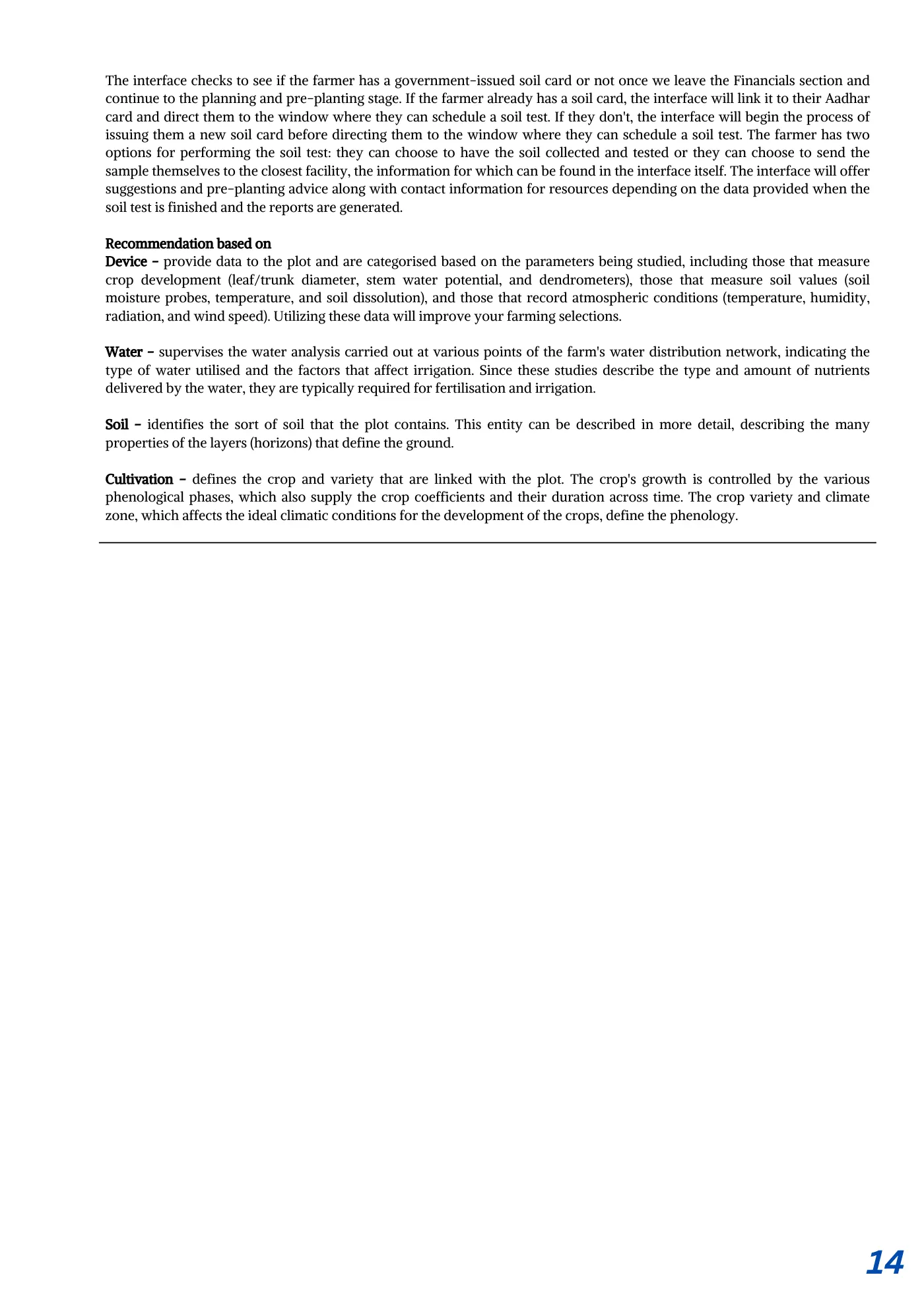
The interface checks to see if the farmer has a government-issued soil card or not once we leave the Financials section and continue to the planning and pre-planting stage. If the farmer already has a soil card, the interface will link it to their Aadhar card and direct them to the window where they can schedule a soil test. If they don't, the interface will begin the process of issuing them a new soil card before directing them to the window where they can schedule a soil test. The farmer has two options for performing the soil test: they can choose to have the soil collected and tested or they can choose to send the sample themselves to the closest facility, the information for which can be found in the interface itself. The interface will offer suggestions and pre-planting advice along with contact information for resources depending on the data provided when the soil test is finished and the reports are generated.
Recommendation based on Device - provide data to the plot and are categorised based on the parameters being studied, including those that measure crop development (leaf/trunk diameter, stem water potential, and dendrometers), those that measure soil values (soil moisture probes, temperature, and soil dissolution), and those that record atmospheric conditions (temperature, humidity, radiation, and wind speed). Utilizing these data will improve your farming selections.
Water - supervises the water analysis carried out at various points of the farm's water distribution network, indicating the type of water utilised and the factors that affect irrigation. Since these studies describe the type and amount of nutrients delivered by the water, they are typically required for fertilisation and irrigation.
Soil - identifies the sort of soil that the plot contains. This entity can be described in more detail, describing the many properties of the layers (horizons) that define the ground.
Cultivation - defines the crop and variety that are linked with the plot. The crop's growth is controlled by the various phenological phases, which also supply the crop coefficients and their duration across time. The crop variety and climate zone, which affects the ideal climatic conditions for the development of the crops, define the phenology.
Page 22
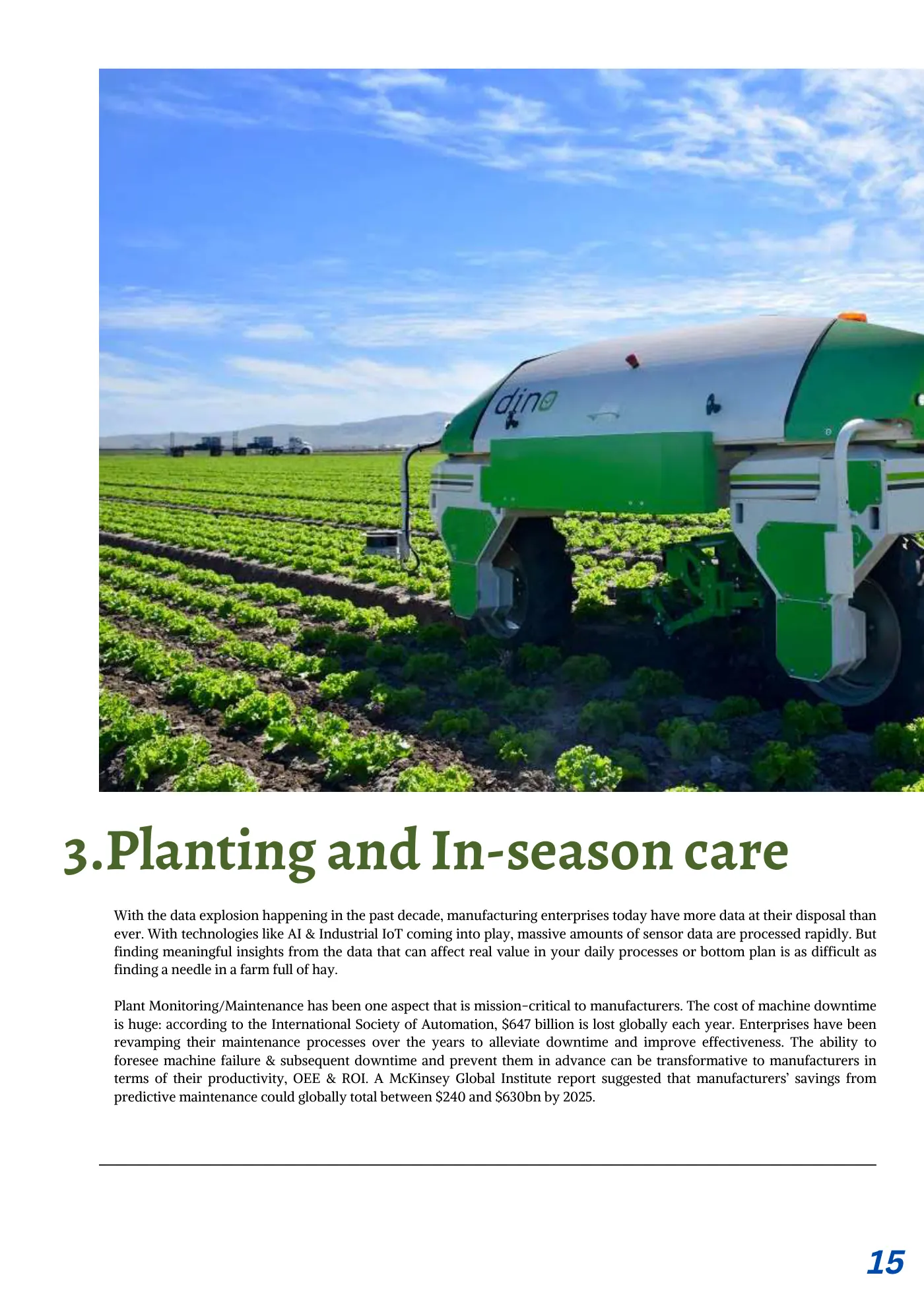
3.Planting and In-season care
With the data explosion happening in the past decade, manufacturing enterprises today have more data at their disposal than ever. With technologies like AI & Industrial IoT coming into play, massive amounts of sensor data are processed rapidly. But finding meaningful insights from the data that can affect real value in your daily processes or bottom plan is as difficult as finding a needle in a farm full of hay.
Plant Monitoring/Maintenance has been one aspect that is mission-critical to manufacturers. The cost of machine downtime is huge: according to the International Society of Automation, $647 billion is lost globally each year. Enterprises have been revamping their maintenance processes over the years to alleviate downtime and improve effectiveness. The ability to foresee machine failure & subsequent downtime and prevent them in advance can be transformative to manufacturers in terms of their productivity, OEE & ROI. A McKinsey Global Institute report suggested that manufacturers’ savings from predictive maintenance could globally total between $240 and $630bn by 2025.
Page 23
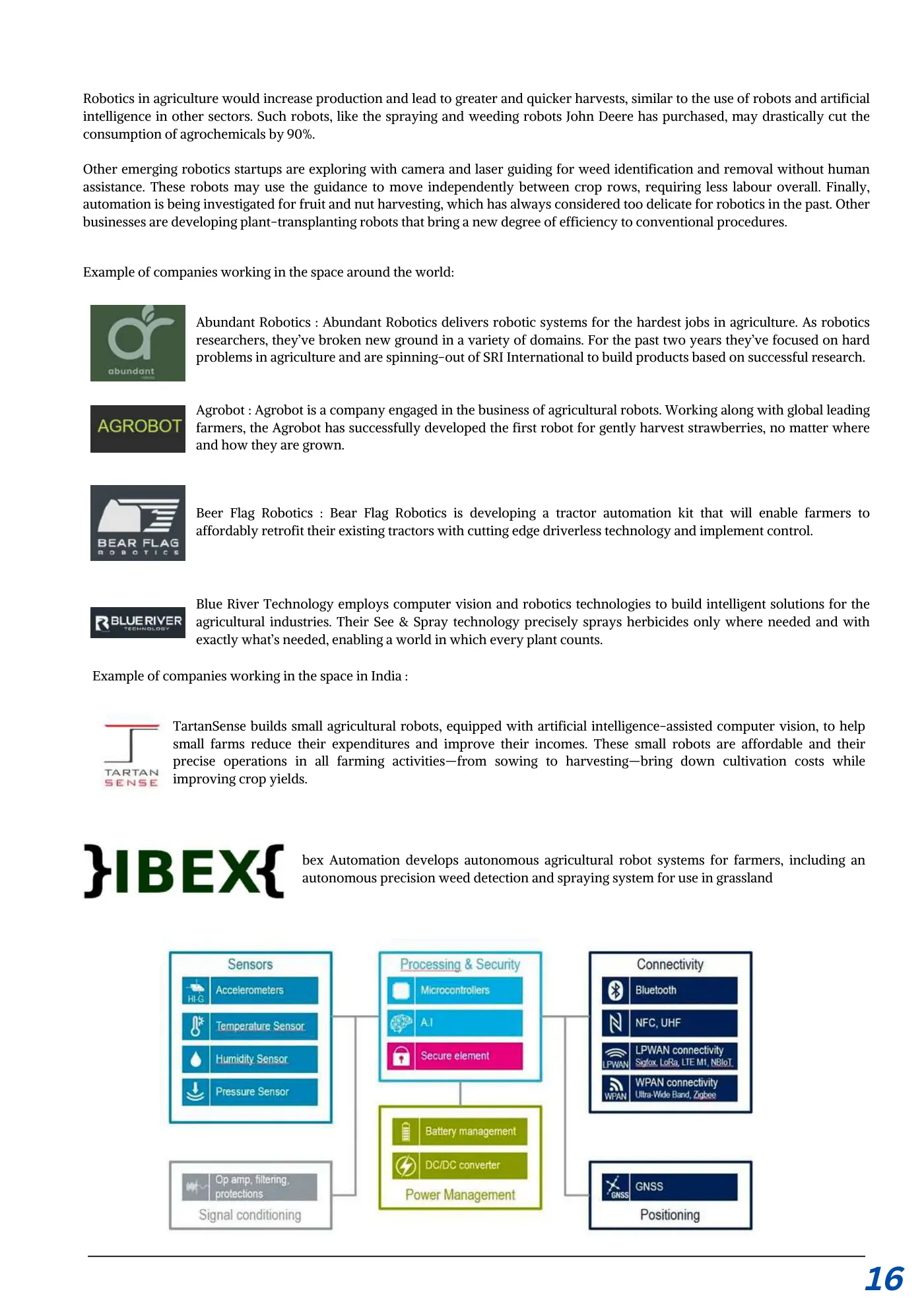
Robotics in agriculture would increase production and lead to greater and quicker harvests, similar to the use of robots and artificial intelligence in other sectors. Such robots, like the spraying and weeding robots John Deere has purchased, may drastically cut the consumption of agrochemicals by 90%.
Other emerging robotics startups are exploring with camera and laser guiding for weed identification and removal without human assistance. These robots may use the guidance to move independently between crop rows, requiring less labour overall. Finally, automation is being investigated for fruit and nut harvesting, which has always considered too delicate for robotics in the past. Other businesses are developing plant-transplanting robots that bring a new degree of efficiency to conventional procedures.
Example of companies working in the space around the world:
Abundant Robotics : Abundant Robotics delivers robotic systems for the hardest jobs in agriculture. As robotics researchers, they’ve broken new ground in a variety of domains. For the past two years they’ve focused on hard problems in agriculture and are spinning-out of SRI International to build products based on successful research.
Agrobot : Agrobot is a company engaged in the business of agricultural robots. Working along with global leading farmers, the Agrobot has successfully developed the first robot for gently harvest strawberries, no matter where and how they are grown.
Beer Flag Robotics : Bear Flag Robotics is developing a tractor automation kit that will enable farmers to affordably retrofit their existing tractors with cutting edge driverless technology and implement control.
Blue River Technology employs computer vision and robotics technologies to build intelligent solutions for the agricultural industries. Their See & Spray technology precisely sprays herbicides only where needed and with exactly what’s needed, enabling a world in which every plant counts.
Example of companies working in the space in India :
TartanSense builds small agricultural robots, equipped with artificial intelligence-assisted computer vision, to help small farms reduce their expenditures and improve their incomes. These small robots are affordable and their precise operations in all farming activities—from sowing to harvesting—bring down cultivation costs while improving crop yields.
bex Automation develops autonomous agricultural robot systems for farmers, including an autonomous precision weed detection and spraying system for use in grassland
Page 24
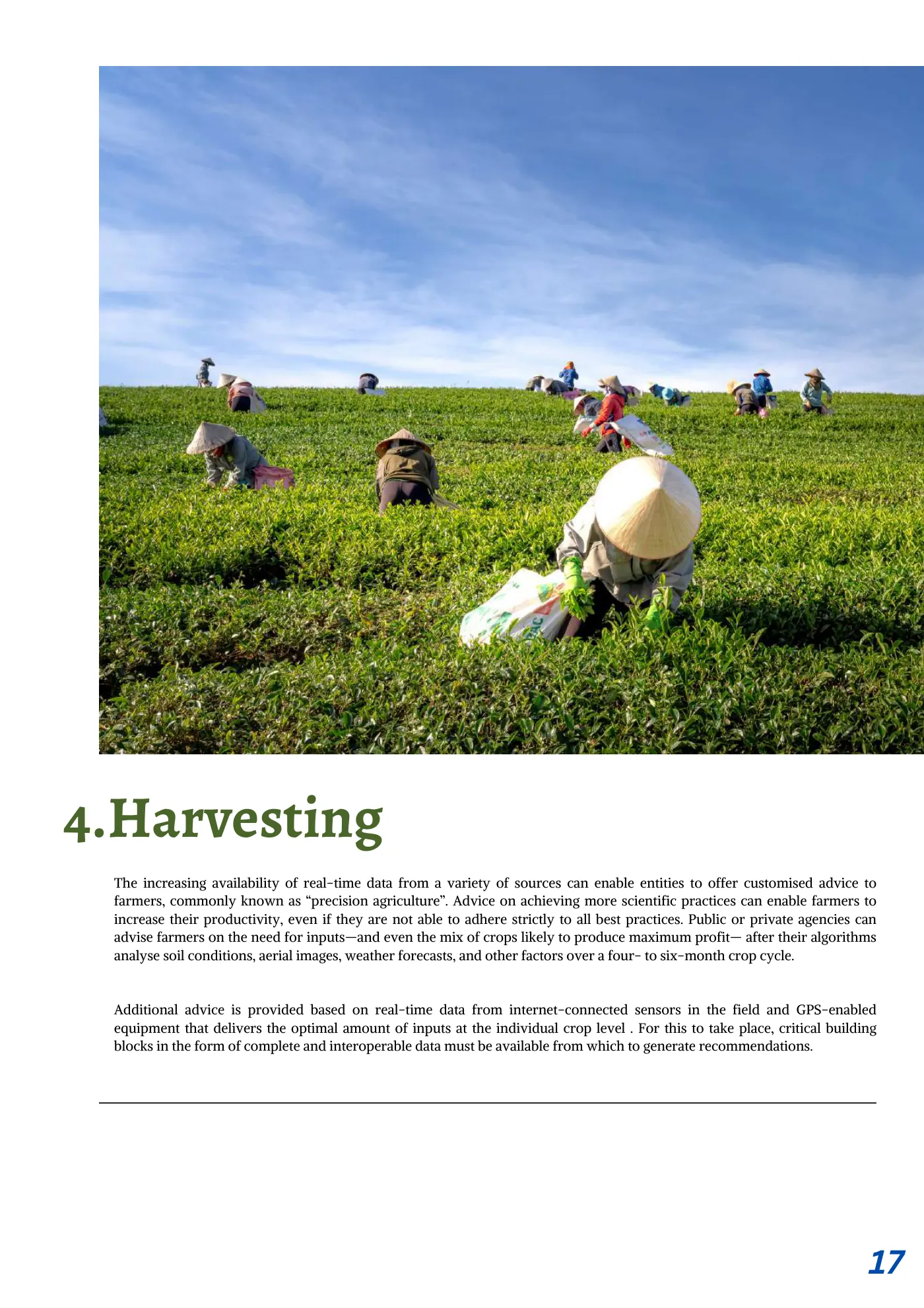
4.Harvesting
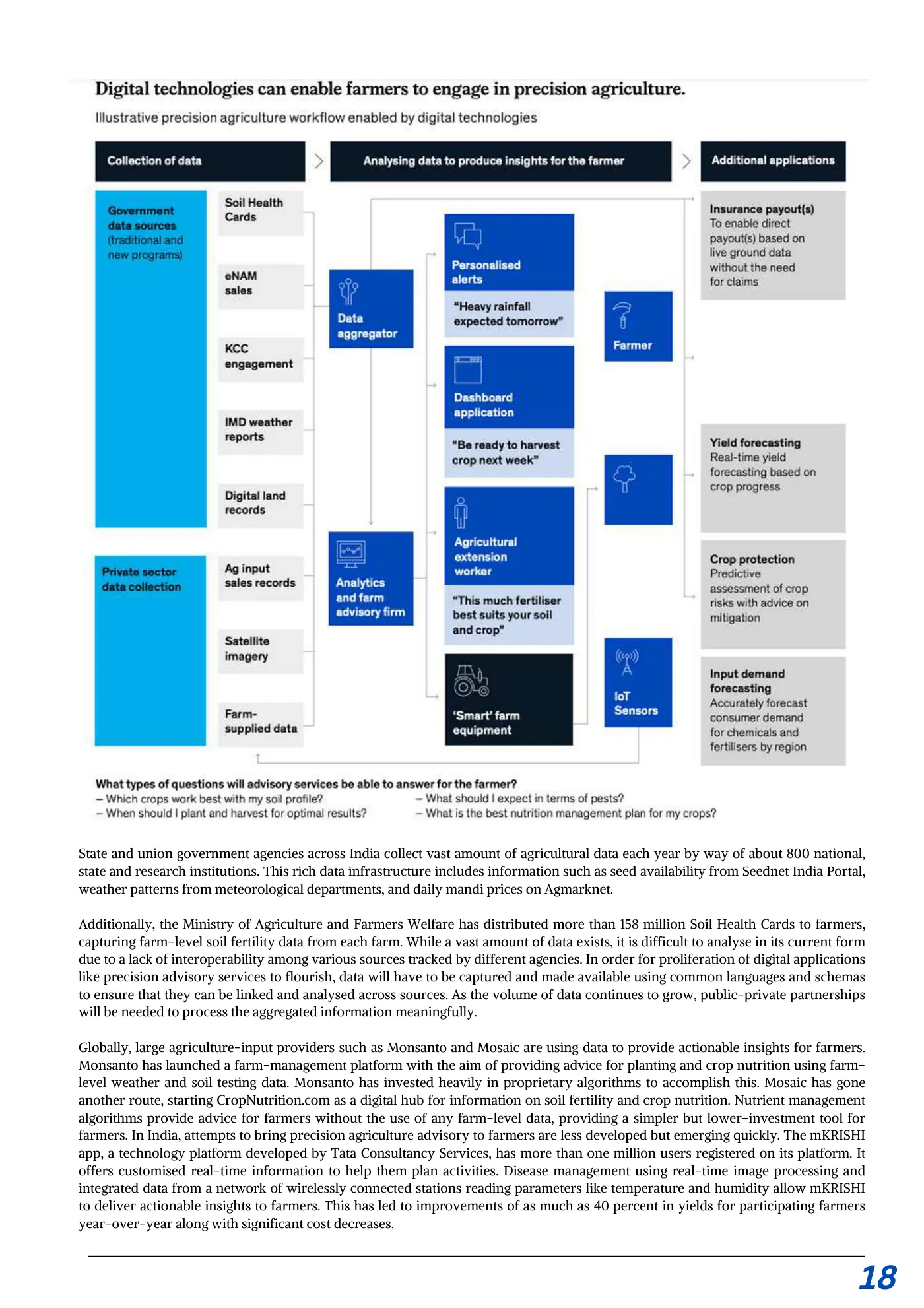
The increasing availability of real-time data from a variety of sources can enable entities to offer customised advice to farmers, commonly known as “precision agriculture”. Advice on achieving more scientific practices can enable farmers to increase their productivity, even if they are not able to adhere strictly to all best practices. Public or private agencies can advise farmers on the need for inputs—and even the mix of crops likely to produce maximum profit— after their algorithms analyse soil conditions, aerial images, weather forecasts, and other factors over a four- to six-month crop cycle.
Additional advice is provided based on real-time data from internet-connected sensors in the field and GPS-enabled equipment that delivers the optimal amount of inputs at the individual crop level . For this to take place, critical building blocks in the form of complete and interoperable data must be available from which to generate recommendations.
Page 25
State and union government agencies across India collect vast amount of agricultural data each year by way of about 800 national, state and research institutions. This rich data infrastructure includes information such as seed availability from Seednet India Portal, weather patterns from meteorological departments, and daily mandi prices on Agmarknet.
Additionally, the Ministry of Agriculture and Farmers Welfare has distributed more than 158 million Soil Health Cards to farmers, capturing farm-level soil fertility data from each farm. While a vast amount of data exists, it is difficult to analyse in its current form due to a lack of interoperability among various sources tracked by different agencies. In order for proliferation of digital applications like precision advisory services to flourish, data will have to be captured and made available using common languages and schemas to ensure that they can be linked and analysed across sources. As the volume of data continues to grow, public-private partnerships will be needed to process the aggregated information meaningfully.
Globally, large agriculture-input providers such as Monsanto and Mosaic are using data to provide actionable insights for farmers. Monsanto has launched a farm-management platform with the aim of providing advice for planting and crop nutrition using farm- level weather and soil testing data. Monsanto has invested heavily in proprietary algorithms to accomplish this. Mosaic has gone another route, starting CropNutrition.com as a digital hub for information on soil fertility and crop nutrition. Nutrient management algorithms provide advice for farmers without the use of any farm-level data, providing a simpler but lower-investment tool for farmers. In India, attempts to bring precision agriculture advisory to farmers are less developed but emerging quickly. The mKRISHI app, a technology platform developed by Tata Consultancy Services, has more than one million users registered on its platform. It offers customised real-time information to help them plan activities. Disease management using real-time image processing and integrated data from a network of wirelessly connected stations reading parameters like temperature and humidity allow mKRISHI to deliver actionable insights to farmers. This has led to improvements of as much as 40 percent in yields for participating farmers year-over-year along with significant cost decreases.
Page 26
5.DLT: De-Centralised Selling
Distributed ledger technologies (DLTs) and smart contracts provide a unique opportunity to bring greater efficiency, transparency and traceability to the exchange of value and information in the agriculture sector. This paper aims to facilitate a better understanding of the opportunities, benefits and applications of DLTs in agri-foods.
It also identifies technical limits and possible institutional barriers to their adoption. By utilising digital records, cryptography and the disintermediation of transaction processing and data storage, DLTs can improve both agricultural supply chains and rural development interventions in a number of ways. First, the ability of the technology to trace a product’s provenance, carry detailed attributes for the product in each transaction and ensure its authenticity brings vast improvements in traceability with positive impact on food safety, quality and sustainability. Second, the disintermediation of transactions in agricultural supply chains and the use of smart contracts enable frictionless and real-time payments for agricultural financial services, which can reduce transaction costs, decrease risk for buyers and sellers and increase cash flow and working capital for farmers and sellers which is usually tied up in complex and paper-heavy settlement processes.
Page 27
More efficient supply chains and agricultural financial services lead to greater financial inclusion and stronger business development. Third, DLTs allow users to build digital identities with their recorded digital and physical assets.
The vast amount of data generated from transactions in agricultural supply chains provides more accurate market information and data for supply chain actors and the public sector, which can be used to inform production and marketing decisions, prove a farmer’s track record to access credit and strengthen the enabling environment with better informed policies. Physical assets registered on the distributed ledger, such as land titles, can be used as collateral to access financing. DLTs are a secure, fast and immutable method to register land titles, providing greater legal clarity to land tenure systems.
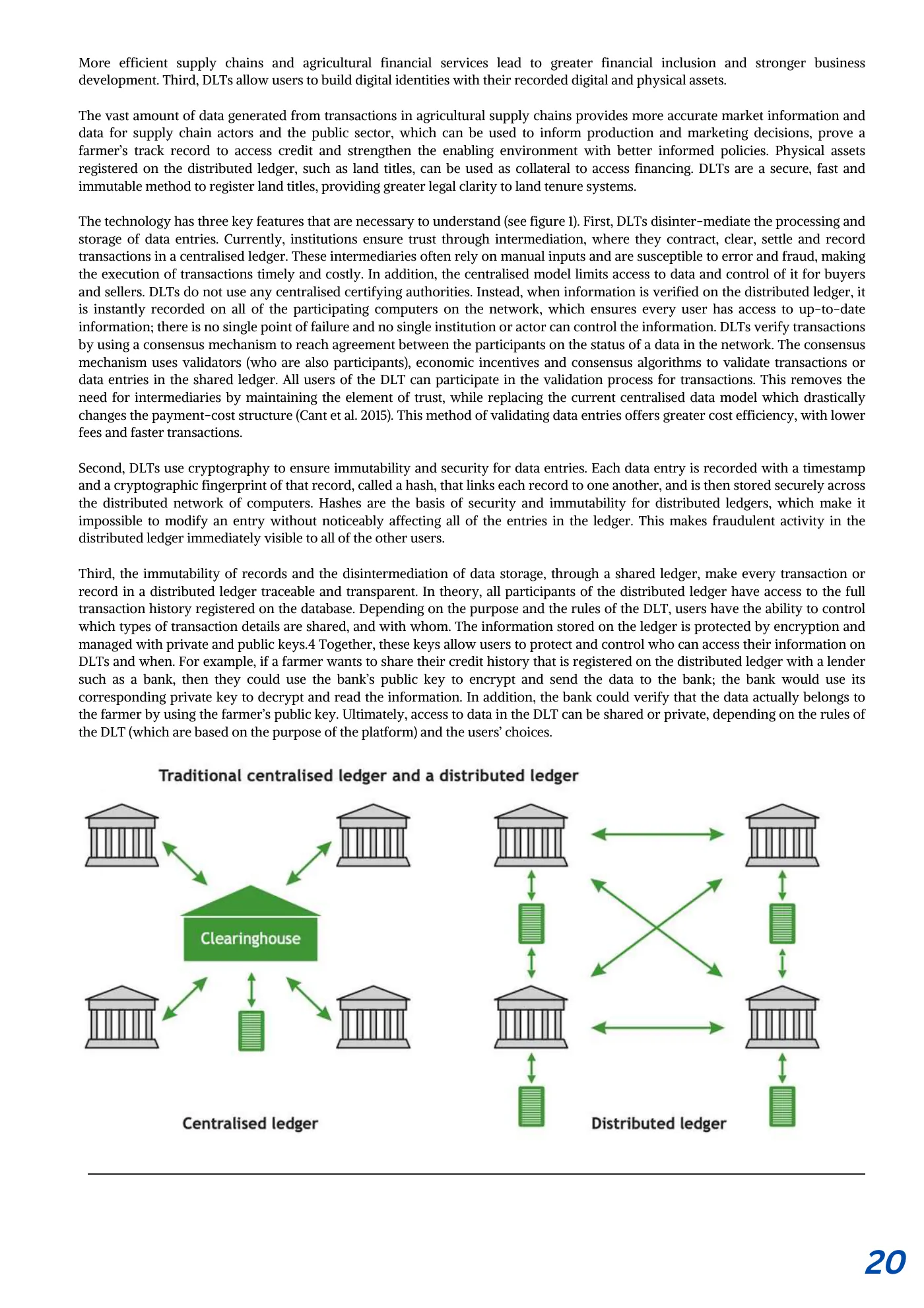
The technology has three key features that are necessary to understand (see figure 1). First, DLTs disinter-mediate the processing and storage of data entries. Currently, institutions ensure trust through intermediation, where they contract, clear, settle and record transactions in a centralised ledger. These intermediaries often rely on manual inputs and are susceptible to error and fraud, making the execution of transactions timely and costly. In addition, the centralised model limits access to data and control of it for buyers and sellers. DLTs do not use any centralised certifying authorities. Instead, when information is verified on the distributed ledger, it is instantly recorded on all of the participating computers on the network, which ensures every user has access to up-to-date information; there is no single point of failure and no single institution or actor can control the information. DLTs verify transactions by using a consensus mechanism to reach agreement between the participants on the status of a data in the network. The consensus mechanism uses validators (who are also participants), economic incentives and consensus algorithms to validate transactions or data entries in the shared ledger. All users of the DLT can participate in the validation process for transactions. This removes the need for intermediaries by maintaining the element of trust, while replacing the current centralised data model which drastically changes the payment-cost structure (Cant et al. 2015). This method of validating data entries offers greater cost efficiency, with lower fees and faster transactions.
Second, DLTs use cryptography to ensure immutability and security for data entries. Each data entry is recorded with a timestamp and a cryptographic fingerprint of that record, called a hash, that links each record to one another, and is then stored securely across the distributed network of computers. Hashes are the basis of security and immutability for distributed ledgers, which make it impossible to modify an entry without noticeably affecting all of the entries in the ledger. This makes fraudulent activity in the distributed ledger immediately visible to all of the other users.
Third, the immutability of records and the disintermediation of data storage, through a shared ledger, make every transaction or record in a distributed ledger traceable and transparent. In theory, all participants of the distributed ledger have access to the full transaction history registered on the database. Depending on the purpose and the rules of the DLT, users have the ability to control which types of transaction details are shared, and with whom. The information stored on the ledger is protected by encryption and managed with private and public keys.4 Together, these keys allow users to protect and control who can access their information on DLTs and when. For example, if a farmer wants to share their credit history that is registered on the distributed ledger with a lender such as a bank, then they could use the bank’s public key to encrypt and send the data to the bank; the bank would use its corresponding private key to decrypt and read the information. In addition, the bank could verify that the data actually belongs to the farmer by using the farmer’s public key. Ultimately, access to data in the DLT can be shared or private, depending on the rules of the DLT (which are based on the purpose of the platform) and the users’ choices.
Page 28
Currently, there are two main types of DLTs: public and private (Jayachandran 2017). A public DLT is an open ledger with permissionless access, where actors in the network are anonymous and do not need to have any previous relationship with the ledger. Public or permissionless DLTs are censor-proof and fully decentralised systems. Participation in the network is open to anyone in the world, which means anyone can make transactions, view the ledger’s entire transaction history and participate in the consensus mechanism. The advantage of public DLTs is that no individual or entity is able to control the information on the ledger and, therefore, the system is neutral.
The two most well-known public DLTs are the Bitcoin blockchain and Ethereum; the latter is a generalised transaction ledger that allows anyone to programme decentralised software applications using smart contracts and executes them on its DLT. The disadvantage of public DLTs is that there may be some malicious actors in the network, since the participants are unknown. Therefore, there may be applications where some types of information are too sensitive to be shared in a fully open ledger, such as for financial institutions. A private DLT is a closed ledger with permissioned access, where users are identified and transactions are validated and processed by actors that are already known by the ledger. By requiring the identity of actors to be known in the private or permissioned distributed ledger, there is an additional layer of security that limits malicious actors, as they can be penalised and ejected from the network.5 Instead of anonymous participants, permissioned distributed ledgers use already authenticated legal entities to validate transactions (Swanson 2015). Using authenticated validators to provide consensus in the network does not mean they can control the approval of transactions. In fact, there is a trade-off for permissioned distributed ledgers where censorship- resistance is sacrificed for legal accountability, while still operating without intermediaries.
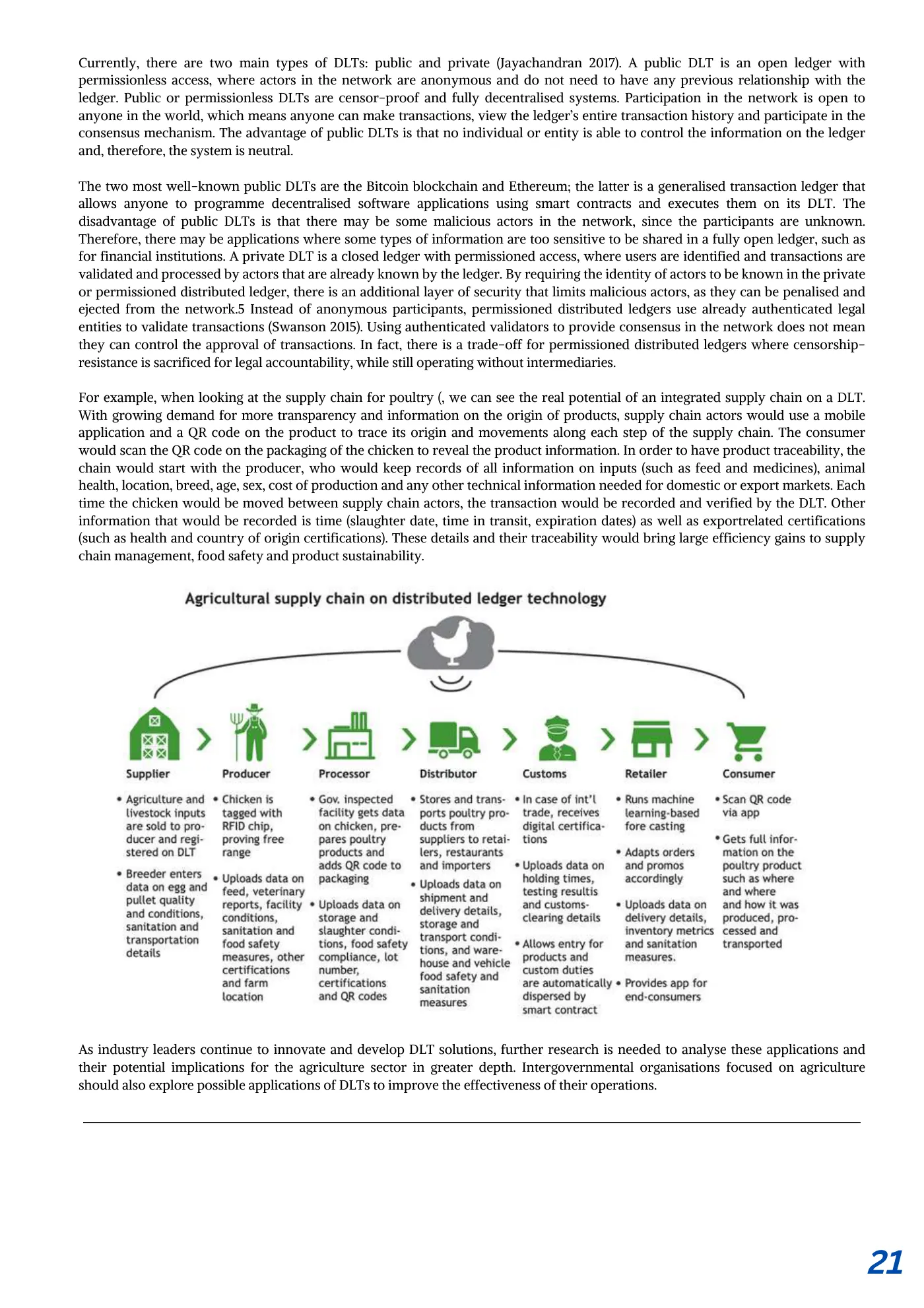
For example, when looking at the supply chain for poultry (, we can see the real potential of an integrated supply chain on a DLT. With growing demand for more transparency and information on the origin of products, supply chain actors would use a mobile application and a QR code on the product to trace its origin and movements along each step of the supply chain. The consumer would scan the QR code on the packaging of the chicken to reveal the product information. In order to have product traceability, the chain would start with the producer, who would keep records of all information on inputs (such as feed and medicines), animal health, location, breed, age, sex, cost of production and any other technical information needed for domestic or export markets. Each time the chicken would be moved between supply chain actors, the transaction would be recorded and verified by the DLT. Other information that would be recorded is time (slaughter date, time in transit, expiration dates) as well as exportrelated certifications (such as health and country of origin certifications). These details and their traceability would bring large efficiency gains to supply chain management, food safety and product sustainability.
As industry leaders continue to innovate and develop DLT solutions, further research is needed to analyse these applications and their potential implications for the agriculture sector in greater depth. Intergovernmental organisations focused on agriculture should also explore possible applications of DLTs to improve the effectiveness of their operations.
Page 30
Recommendation for Digital Transformation in Indian Agriculture Sector
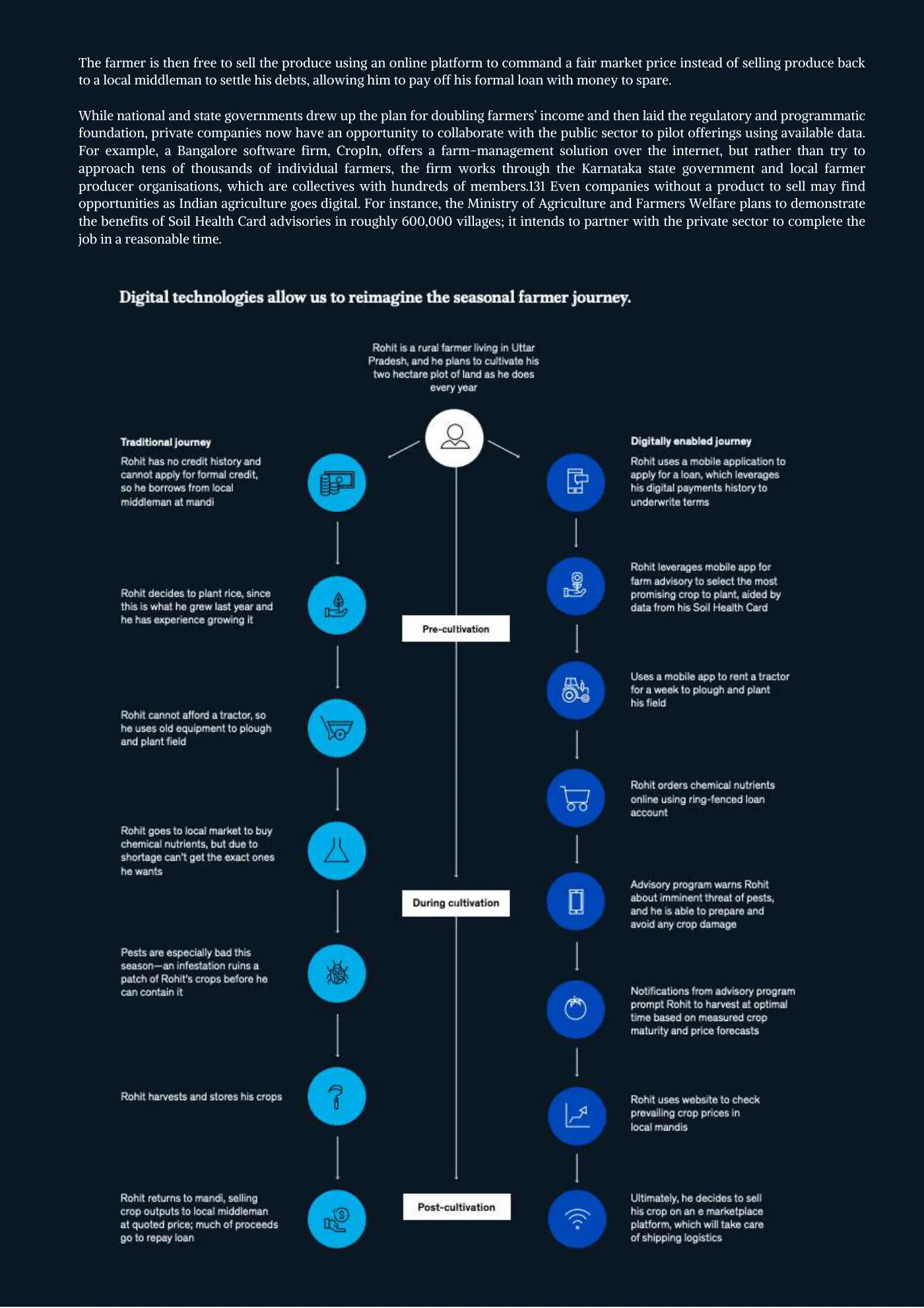
The potential gains from digital agriculture applications could be considerable. For example, moving 40 to 60 percent of agriculture product sales to a universal marketplace by 2025 is forecasted to increase prices paid to farmers by 15 percent.128 Widespread implementation of advisory for precision agriculture, such as digitally enabled advice on crop choice, fertiliser use, weather patterns, and other variables, could increase yields by 15 to 20 percent, or $20 billion to $25 billion per year by 2025.129 Combined, these and other digital technologies could help food production better keep pace with the country’s population growth, add $50 billion to $70 billion of economic value in 2025—and fundamentally change Indian agriculture.130 Individual farmers stand to gain from digital technologies at every turn in their crop cycle. Receiving digitally enabled credit and insurance, instead of a loan from the local middleman, can lead to other benefits. A digitally enabled farmer may use advisory services to plant the most efficient crops for his soil type, avoid a pest infection thanks to an app- based notification, and harvest crops at the opportune time.
Page 31
The farmer is then free to sell the produce using an online platform to command a fair market price instead of selling produce back to a local middleman to settle his debts, allowing him to pay off his formal loan with money to spare.
While national and state governments drew up the plan for doubling farmers’ income and then laid the regulatory and programmatic foundation, private companies now have an opportunity to collaborate with the public sector to pilot offerings using available data. For example, a Bangalore software firm, CropIn, offers a farm-management solution over the internet, but rather than try to approach tens of thousands of individual farmers, the firm works through the Karnataka state government and local farmer producer organisations, which are collectives with hundreds of members.131 Even companies without a product to sell may find opportunities as Indian agriculture goes digital. For instance, the Ministry of Agriculture and Farmers Welfare plans to demonstrate the benefits of Soil Health Card advisories in roughly 600,000 villages; it intends to partner with the private sector to complete the job in a reasonable time.
Page 32
The farmer is then free to sell the produce using an online platform to command a fair market price instead of selling produce back to a local middleman to settle his debts, allowing him to pay off his formal loan with money to spare.
While national and state governments drew up the plan for doubling farmers’ income and then laid the regulatory and programmatic foundation, private companies now have an opportunity to collaborate with the public sector to pilot offerings using available data. For example, a Bangalore software firm, CropIn, offers a farm-management solution over the internet, but rather than try to approach tens of thousands of individual farmers, the firm works through the Karnataka state government and local farmer producer organisations, which are collectives with hundreds of members.131 Even companies without a product to sell may find opportunities as Indian agriculture goes digital. For instance, the Ministry of Agriculture and Farmers Welfare plans to demonstrate the benefits of Soil Health Card advisories in roughly 600,000 villages; it intends to partner with the private sector to complete the job in a reasonable time.
To realize the opportunity of emerging technologies for agriculture and food systems much change is needed. For instance, it will be critical to develop a flexible framework/handbook for defining a PPP approach through multi-stakeholder consultations, which can then be adopted by states to meet specific priorities. Working with academic and research institutions, a partnership approach for innovators should also be enabled to co-develop the proposed framework and evolve the above given approach.
Since the budget announcement of hi-tech services for farmers through a PPP approach, there is a need of launching this initiative in mission mode. National and state governments can strengthen the dialogue with private stakeholder ecosystem and establish the PPP framework through consultations and evidence-based learning through pilots.
Overall, it is an excellent opportunity to formulate a complete infrastructure as suggested above and follow the framework this will help India reach it's potential economic value of $50-65 billion through digital agriculture by 2025 translating to 23% addition to the current value of agricultural produce, according to a report by the country’s Ministry of Electronics and Information Technology and McKinsey & Company.